Sunday, February 13, 2011

Nokia + Microsoft Mobile = bankrupcy?

About two years ago Nokia launched N97 as a response to the iPhone challenge – all of us who explored this ‘innovative’ new Nokia phone was rather surprised that it was possible to launch anything as poor as this …?#$...

Not only was this a poor mimic of the iPhone, but it was low quality and really poor usability – ages away from anything that could resemble the iPhone or challenge the iPhone. At the time I predicted 10 years before Nokia would go bankrupt if this was the best they could come up with… In the meantime the Google Android OS has been launched and embraced by most of Nokia’s competitors – Android is a real challenge to iPhone, but Nokia did not follow the crowd, they continued with Symbian, until now…. Nokia is so down on their knees that they actually marries another mobile looser, Microsoft mobile 7 which their partners have left already to the benefit of the much more user friendly Android.

HPC, one of the more successful smartphone providers left the Microsoft platform and shifted early to the much more modern Android. Why would Nokia think they will be successful with Microsoft 7 – have they not noticed that there has been a shift of paradigm and that the iPhone, and now Android, represents a disruptive technology? Just like the mobile communication technology (GSM, GPRS, etc) was to the land line telephony in the beginning of the 90's…

Monday, December 27, 2010

"Management is the Most Creative of Arts"

I doubt there are many persons in my generation that can identify the origin of the following quote:

"Management is, in the end, the most creative of all arts - for its medium is human talent itself. What, in the end, is managements most fundamental task? It is to deal with change. Management is the gate through which social, political, economical, technological change - indeed change in every dimension - is rationally and effectively spread through society.
Some critics, today, keep worrying that our democratic, free societies are being overmanaged. The real truth is precisely the opposite. As paradoxical as it may sound, the real threat to democracy comes from undermanagement, not from overmanagement.....
" (my bold face emphasis)

This is an excerpt from a speech made by Robert S McNamara in 1967 when he set out his vision of the role of management and its importance in our world.
I am sure I share shudders with lots of persons of my generation when we hear the name of McNamara whom the most of us connects with his role as the US Secretary of defense during the Vietnam war, but in reality he is regarded as one of the most brilliant management spokespersons and tutors of the modern management philosophy that I am sure Barack Obama and other 'modern' leaders today subscribes to - not to mention all those that really should read McNamara on management to execute their management roles more efficient and to the best of the team they are managing - simply put, there is lot to learn from this brilliant and wise man.
Another cold war 'ghost', Barry Goldwater, said: "McNamara is one of the best secretaries ever, an IBM machine with legs" - that sounds to me as .......

Sunday, December 26, 2010

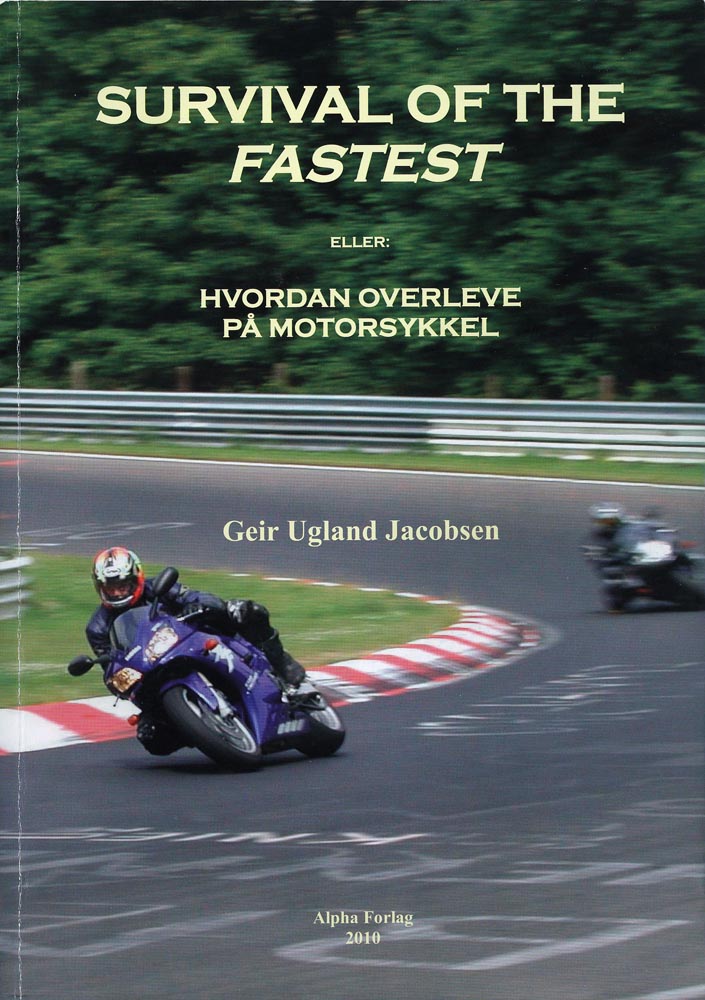
MC kjøreteknikk og mange gode råd

Endelig en Norsk bok for oss som allerede dagen etter at vi har satt bort sykkelen for vinteren føler abstinens og rykk i clutch- og brems-fingeren for om mulig våren kommer tidlig neste år...
Boka til Geir Ugland Jacobsen fortjener en honnør for sitt forsøk på å balansere behovet, for noen MC-førere, å kjøre fort og samtidig ikke ta unødvendig risiko og/eller å sette andre trafikanter i fare. Geir gir et definitivt modent innblikk inn i MC-førerenes utfordringer blandet med sine egne omfattende erfaringer og gode råd - og gode råd er det mange av.
Sjøl er jeg bare opptatt av svinger, Geir er i tillegg opptatt av fri fart på Tyske autobahn og/eller på Ringen, helt greit spør du meg, dersom det gjøres med fornuft - og til det tror jeg Geir er et godt forbilde.
Sjøl er jeg som sagt, kun opptatt av svinger, dvs svingteknikk og det å kunne ta svingene så raskt og korrekt som mulig - og dessuten deler jeg med Geir hans begeistring for naturopplevelsene du får på Norske veier om de nå er på Vestlandet eller Østlandet.
Jeg deler også Geir's forundring over trafikkmyndighetene og deres tolkning av fornuftig kjøring, dvs ikke all kjøring over fartsgrensen er ufornuftig, det må sees i en helhet. Blant mine egne erfaringer har jeg fra over Dovrefjell i topp vær og sommerføre, nesten ingen trafikk og muligheter til å se veien flere kilometer foran deg, da er det vanskelig å forstå at 101km/t er uforsvarlig...
Geir har mange gode erfaringer og eksempler å dele med leseren som jeg i høyeste grad kan kjenne meg igjen i og som er gode påminnelser nå i vintermørke hvor vi alle bare sitter å venter på mildere klima, vår og sykkelslepp!

Dette var en fin julepresang og en herlig lesing som selvsagt ikke har hjulpet mye på å redusere forventningene til våren. Dersom det skal sies noe ut fra en subjektiv negativ observasjon så måtte det være at bokas forfatter har en lang liste med "riskokere" på samvittigheten som alle mer eller mindre har kraft og høy toppfart som fellesnevnere, ikke sikkerhet som jeg vektlegger høyt. Med dette mener jeg at teknologien innenfor sikkerhet og MC for lengst har løst "stoppie" problemet med f.eks. BMW's paralevel "stupgaffel". Det samme kan sies om frivillig og ufrivilige "wheelies" - bakhjulskjøring som kan skrues av og på med BMW's antispinn. Antispinn løser også delvis problemet med grus i kjørebanen og plutselig glatt kjørebane og på toppen av det hele så har flere andre produsenter enn BMW også løst problemet med feil nedbremsing ved å la ABS og balansert forbrems virker på både bak- og forbremsen. Beklager Geir, men jeg måtte bare si det ;-), et teknologihjerte som mitt lar seg selvsagt også begeistre av disse løsningene. Uansett, boka anbefales på det sterkeste!
Boka kan dere bestille på: www.fastest.no

Monday, November 8, 2010

So long and thanks for all the fish!

This famous quote from The Hitchhiker's Guide to the Galaxy by Douglas Adams should be known to most of you, but what is possibly less known, is how much fish do we actually have in our great ocean?

We have a long history of performing censuses in each country to better understand population growth of people
and even cows and pigs, but we have never done a census of the marine life! This means that we possibly know very little about the ocean that feeds us, not only as food, but also in terms of what we need to live as the ocean produces about 70% of the oxygen in the atmosphere.

The newly published Census of the marine life is a unique first attempt to better understand the life in the great ocean of our planet. It has been composed by 17 different international projects over 10 years involving more than 2,700 researchers and more than 500 expeditions. The result is more than 1,000 new species to science – and still counting!

The fact that the ocean is to Earth thinner than the skin to an apple, we know very little about the diversity and what is going on in the great depths of the ocean that science just a few years ago was certain did not contain any life forms, but we were all wrong! In 1990 experts estimated that less than 5% of the biodiversity in the ocean had been described. If we start counting microbes, it gets even more breathtaking as a single litre of seawater can contain more than a billion microbes and the microbes accounts for 90% of the total biomass in the ocean!

So, there is a job to do and a great opportunity to better understand how to ensure that our great ocean can be harvested in a sustainable way to the best of the entire population of the planet, and that includes the marine life itself, as there are many predators out there that belong to the food chain. Talking about predators and food chain, the humans are on the top and we should of course be the most concerned about our harvest and hunting habits.

In the October 2010 issue of National Geographic you can read about the disturbing consequences of fishing (and eating) top predators in the sea. One such top predator is the Atlantic bluefin tuna another is the Atlantic salmon. The blufin tuna is about to get extinct and it becomes obvious if you look at the price tag for each fish in market, they easily reach tens of thousands of dollars. The blufin tuna is slow to reproduce and is among the most energy demanding predators in the sea. If you eat 1 kg of a blufin tuna, it equals to 10kg of its intermediate predators like Pollock and herring and 100 kg of anchovies and lobsters and 1,000 kg of phytoplankton. This is really amazing and should be back of your head next time you go to the fishmonger. Ask for 1 kg herring or squid as it has a tenfold less impact on the species in the ocean.

Talking about buying and eating fish, one fisherman in Norway told us recently on the news that when he sent 1kg fish for preparation and packaging to China, he got 1.2 kg back. The reason is that the fish is being filled with water and Tri Sodium di Phosphate – that is E450 – how do you like that? Apparently the food authorities don’t care if you are being fed with phosphate – what about you?

We all should be more concerned about the link between the fish industry and the authorities, another example from Norway is the giant red King crabs (Kamchatka) that are now invading and clearing the sea floor along the cost from North to South and the fish industry is being imposed catch limitations to ensure the prices are kept high – what about the ocean environment and the diversity – down the drain, if you ask me!

In reality, and very much confirmed by the Census of the marine life, we don’t understand the consequences of wiping out huge amount of marine life as we still dont understand how vast the marine life really is. The most dense populated places in the ocean is the coral reefs, even here the scientists only have estimates that it is the home of between 600,000 and 9,5 million species, talking about big variations in estimates – and btw, there are deep sea coral reefs along the Norwegian cost line as well.

Make sure you eat the delicious and nutritious food from the ocean, but be a bit more cautious about what you eat. In 1949 Danish fishermen catches 5,500 tons of bluefin tuna, today they are extinct. And remember, it is all or nothing, that is, even the fish we don’t eat (at least most of us) needs to be protected, in the Mediterranean Sea, sharks have declined 99.99%!

Check out the ocean-film http://www.coml.org/oceans-film

Friday, October 22, 2010

Serious Men


I have just completed a hilarious and amusing book “Serious Men” by Manu Joseph – and I need to share with you some of his very Indian and very global philosophical views through some of the statements given by the characters in this very readable book.

First of all, the book is about a clerk (read low cast) who is the secretary to the Director (high cast Brahmins) of Institute of Theory and Research, a kind of sandbox for astronomy and even bioastronomy (?). One of the tasks given (or taken) carried out by the secretary is to write ‘Thought for the day’ on the Institute blackboard and as a low cast he also enjoys the possibilities of upsetting any of the researchers as they are all Brahmins and has been given education – he himself has 'only' an IQ of 148, but has still not been given the opportunity of higher education. When he writes the thought for the day, he picks up real quotes by famous science people, but he also invents some quotes which the said person have never given:


It’s a myth that Sanskrit is the best language for writing computer code. Patriotic Indians have spread this lie for many years” – Bill Gates

A greater crime than the Holocaust was the untouchability. Nazis have paid the price, but the Brahmins are still raping the rewards for torturing others” – Albert Einstein

If souls are indeed reborn as the Brahmins say, then what accounts for population growth? Rebirth is the most foolish mathematical concept ever” – Isaac Newton


As you can understand, this is a must read book and I cannot resist some of the quotes by the Director himself, even though he is a Brahmin, he is being respected by his secretary, possibly because of his brilliance, but also because he is not concerned about petty things and is brave enough to say so. As a astronomer he opposes all theories about the big bang and he is not supporting any activities related to listening for aliens by spending lots of money on radio-telescopes etc. The human search for aliens is now in the imbecilic stage that robotics once was” and he goes on “…I will not support people who presume that somewhere, far away in space, there could be beings so human that they will build machines that will send radio signal. Man is not searching for aliens. Man is searching for man. It’s called loneliness. Not science” he has got a point and its getting better “Scientist want to search for alien signals because that’s what gets them publicity. They are like Jesus Christ.

You know he turned water into wine. From the point of view of pure chemistry, it is more miraculous to make wine into water than to make water into wine. But he did not do that. Because if he had gone to someone’s house and converted their wine into water, they would have crucified him much earlier….”


Enjoy!!

Tuesday, August 10, 2010

An exciting moment for an amateur entomologist

Check out this tiger striped swallow-tail - quite common in Italy, but for someone from cold Nordic (who has papilio machaon) this one is really beautiful!
The picture is actually taken with my iPhone in the right hand while the swallowtail is shocked and resting on my left hand...

Thursday, July 29, 2010

Wine, Italian food and beautiful landscapes (and biker roads)

This year motorbike vacation started in Oslo on the Oslo-Kiel ferry - rather crowded as there was a large group of Germans 'going home' after a long cruise to Nordkapp.
After cruising, on scenic country roads from Kiel to Hamburg, the day after, we loaded the bikes on the excellent DB AutoZug. The train is very popular, not only among bikers, but also by car travellers who wants to avoid the 'boring' autobahn through Germany.

Once the bikes where loaded, we entered our two-bed cabin with our own bathroom including a shower - really ingenious on how they have been able to fit a bathroom with a toilet and shower on such a small space, but there you go, the cabin even had a working air-condition - which we soon discovered we would need when we entered the south side of the alps where the temperature was above 30 degrees - every day!

On arrival in Verona we tanked and drove towards Modena - we had a lovely hotel in a lovely town:


From Modena we drove over the Appenins, was surprised by a heavy rainfall, but arrived outside Florence in sunshine and enjoyed the scenic Chianti Classic wine road (S222) all the way to Castellina in Chianti.
In Castellina we stayed a few days, enjoying the lovely hotel in the center of this lovely small (wine)town. Everyday we also enjoyed the beautiful view from our window - including early morning wildlife.

Next stop was Montalcino - famous for its Brunello wines and the fantastic view over the wine-areas below - we also took the opportunity to visit one of the many hot springs for a bath on the road between Montalcino and Montepulcano.


After Montalcino we drove north in Tuscany again and reached Puccini's Lucca late the same day in a very hot 35 degrees with silk-soft night air and a very enjoyable small town.


After lovely Lucca, we went back to Verona through Parma (one night to taste the best ever Parma ham, Parmesan and wine). In Verona we had the pleasure of enjoying Madama Butterfly in the famous nearly 2000 year old outdoor Arena at the center of Verona.

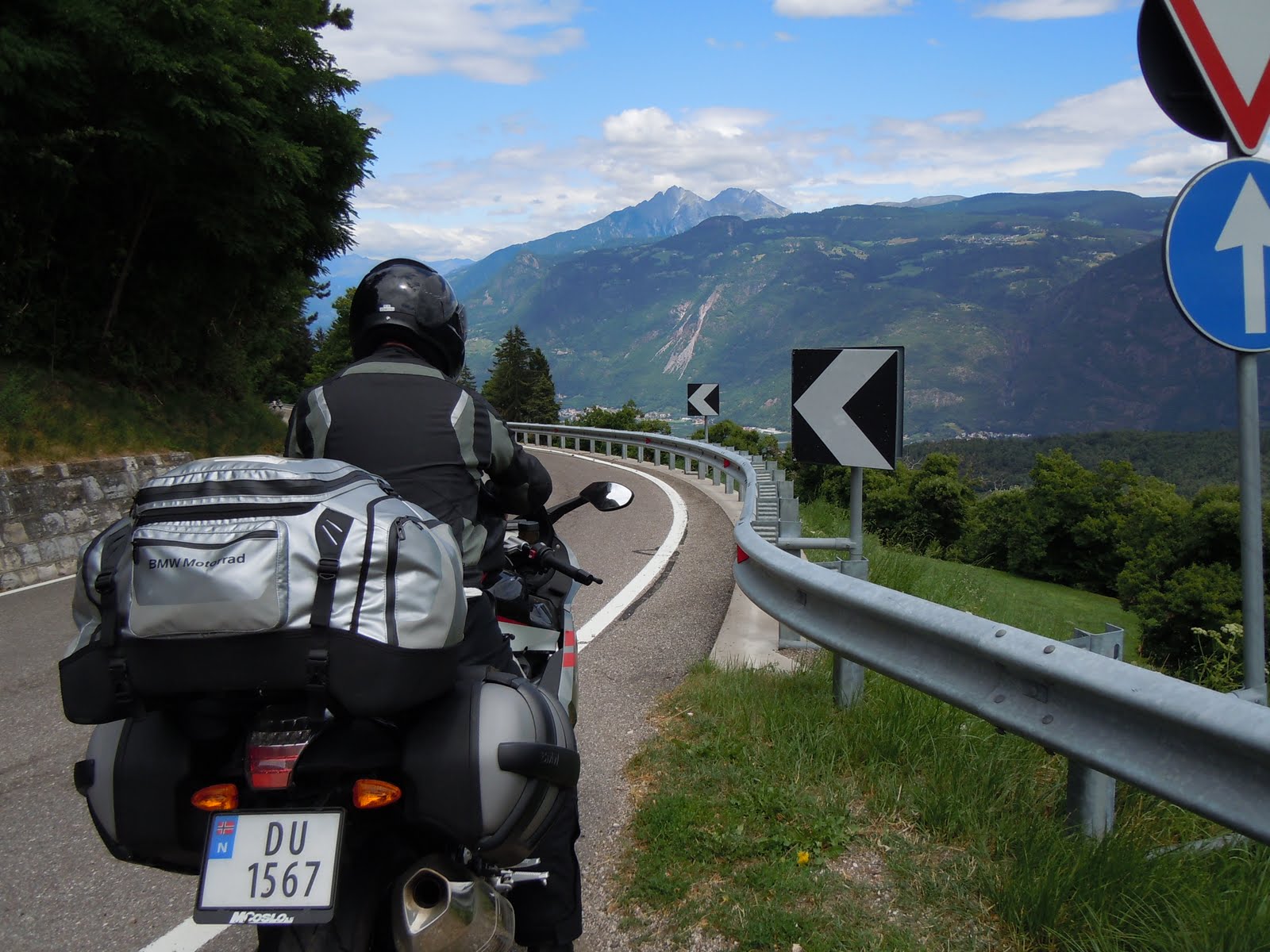
After Verona we drove further north to our 'little secret', the beautiful little Sud-Tirol town of Merano where there are very few tourists, majestic surrounding Alps and top service from the hotel in the center of the town - the road to Merano includes also some of the best motorbike roads in Italy with perfect curves and breathtaking views of high mountains as well as plains down below - and if you add perfect weather one can easily understand that this is one of my favourite:


This last flower-picture is the view from our hotel-room. After Merano, the last leg was to Bozano where the bikes once again was loaded onto the AutoZug and we returned back to Oslo via Hamburg and Kiel with many good memories of beautiful Italy, great motorbiking and good food and wine!

Løgner og arsenikk

Fra i dag kan boka kjøpes i hvilken som helst bokhandel og bokhandel på nett: